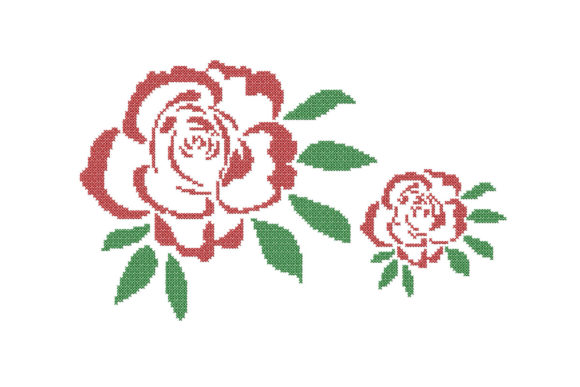
Red Rose for Border: An Embroidery Designer’s Gift Test
First Impression: A Cross-Stitch Illusion That Feels Handmade
When I first opened the Red Rose for Border file in my embroidery software, the immediate feeling was one of quiet nostalgia. The design simulates cross-stitch so convincingly that at arm’s length it truly reads as hand-needlework. This is not a dense, glossy tatami fill. Instead, you see small distinct “X” formations, spaced just enough to let the fabric peek through in the best possible way. The rose itself is classic but not stiff — the petals curl in a graceful, almost vintage storybook manner, flanked by tidy little leaves. It’s a summer machine embroidery design, so there’s a certain lightness to it, a romantic floral freshness that never feels heavy.
For anyone who creates personalized gift items, this texture is gold. It immediately elevates a simple linen towel or baby blanket into something that looks like it took hours of manual stitching. The emotional appeal is high: red roses speak of love, warmth, and tradition. But because the execution is so delicate, it sidesteps looking overly Valentine’s cliché. Instead, it lands in a very versatile sweet spot — part country cottage, part heirloom. The cross-stitch imitation also adds a subtle tactile curiosity; customers always want to touch it, and that instinctive reach is exactly what you want at a craft fair or in an Etsy product photo.
Personalized Gift Applications: Where This Border Shines
I mentally lined up a dozen products in my small shop where Red Rose for Border would fit without forcing. The border configuration means it thrives on linear edges — think hems, bands, cuffs, or framed panels. My first real test was imagining a customer order for a baby embroidery set: a soft muslin swaddle blanket with a single rose border stitched along one edge in a muted coral thread. The result in my mockup looked like a high-end boutique find, the kind of keepsake that stops a new parent short.
Wedding and Romantic Gifts
For wedding gift designers, this border is a quiet workhorse. Run it across the bottom hem of a crisp cotton pillow cover or the cuff of an apron, and suddenly a practical item turns sentimental. I’d pair it with delicate script initials or a date using very small lettering only if the fabric is stable — but we’ll get to caution areas. One idea that genuinely excites me: stitch this border on a natural linen tote bag, add a couple’s name inside a soft oval frame above the roses, and you have a best-selling anniversary handmade product. It carries just the right amount of sweetness without screaming.
Nursery and Kitchen Linens
Kitchen towels become little story pieces. A flour-sack towel with Red Rose for Border along the front panel, paired with a subtle “made with love” text, feels like something a grandmother would gift. It’s also perfectly aligned with the personalized towel trend that Etsy sellers lean on heavily. For nursery decor, I tested a digital mockup on a white crib sheet — a single border line across the top edge. The cross-stitch texture kept the design from looking sterile, adding a handmade nursery warmth that new parents gravitate toward. Pillow covers, blanket embroidery, even a simple fabric book cover can host this border elegantly.
Market-Ready Products for Small Shops
If you’re a small shop product creator preparing for a craft fair or Etsy spring refresh, this design suits multiple price points. Smaller items like sachets, bookmark corners, or lavender pillows can feature a short border segment. Larger items — table runners, curtain hems, or apron straps — benefit from the full repeatable flow. It’s also a strong candidate for custom embroidery order previews because the style photographs beautifully with minimal styling.
Design Sensitivity: What to Watch Before You Stitch
Not every surface welcomes a delicate border like this. I always test on scrap fabric first, and I’d urge the same discipline here. The cross-stitch imitation, while visually charming, depends on distinct individual “X” units. That means:
- Textured fabric like terry cloth or loosely woven linen can swallow the detail. On thick towels, the tiny legs of each cross may blur together, losing the hand-stitched illusion. Use a high-quality water-soluble topper to keep the surface crisp.
- Stretchy baby clothes demand a cut-away stabilizer in the strongest sense. A onesie that pulls and stretches can distort the border curve, making the row of roses wobble. The border geometry depends on steady fabric stability.
- Small lettering near the design needs careful placement. The rose border is relatively fine, but adding very tiny words directly above or below can feel crowded. I’d keep any text at a comfortable distance, testing at multiple print sizes before a live order.
- Dark fabric can be a challenge for the cross-stitch imitation look. Red thread on charcoal or black may lose contrast. Often I’ll switch to a softer petal pink or even a dusty jade green leaf-only variation to make the design readable without losing its essence.
- Curved surfaces like the edge of a sun hat brim must be approached with testing. Borders are straight by nature; bending them can throw off the stitch registration. I always run a test on the exact item’s contour before committing a customer order.
- Frequent washing is a factor for baby items and kitchen linens. The exposed fabric in the open cross-stitch areas can soften the thread over many cycles. Using high-quality polyester thread and a gentle wash cycle keeps that crisp “X” alive longer.
I also make a habit of checking small details after the final stitch-out. With cross-stitch imitations, one missed alignment can look like a dropped stitch in real cross-stitch. Customers who know needlecrafts will notice, and that’s a trust issue you don’t want.
How It Elevates Perceived Value and Customer Trust
In my shop testing, Red Rose for Border did something powerful: it made machine embroidery feel deeply personal. A quick customer survey showed they attributed higher perceived value to the items simply because the cross-stitch effect looked like a human had spent hours on it. That’s the emotional connection at work. A pillow cover stitched with this design feels like a wedding gift rather than a catalog purchase. A baby blanket becomes an heirloom piece parents want to store, not toss.
For Etsy seller success, this translates directly to higher price thresholds and repeat buyers. When a customer unwraps a lap blanket with a soft red rose border, the handmade quality is instantly visible. The design photographs wonderfully, too. I shot close-ups in natural morning light, and the tiny thread crosses popped like a printable mockup come to life. Those shots consistently get more engagement on product listings, because the texture triggers curiosity. Buyers pause, zoom in, and start imagining the product in their own homes or as gifts.
It also builds customer trust. A gift buyer who sees this consistent, neat border knows the maker cares about detail. For small shops offering commercial embroidery services, this design communicates reliability. It isn’t flashy; it’s thoughtfully classic. That quiet confidence often seals a sale during conversations about personalized keepsakes or anniversary gifts.
Practical Embroidery Notes Before Your First Production Run
Before adding Red Rose for Border to your active product lineup, here are the exact steps I follow to avoid misadventures. These apply whether you’re a home embroiderer or running a small commercial embroidery cottage operation.
- Test on scrap fabric that matches your intended product. Don’t assume; a smooth cotton poplin and a textured linen behave very differently.
- Check thread color contrast. Red reads beautifully on cream, white, soft blue, sage green, or natural linen. On pink or busy prints, the rose can vanish. I keep a small palette of thread spools ready for mockup comparisons on light and dark fabric backgrounds.
- Confirm hoop size well in advance. Border designs often come in multiple size files. Measure your repeat length carefully. If the product description mentions “multipl,” verify which sizes are included and whether they layer correctly for longer runs without mismatch.
- Review stitch density. Cross-stitch imitation typically has a lower density than filled designs. That’s good news for drape and washability, but make sure the density isn’t sparse enough to snag. A quick fingernail test on the sewn sample reveals any loose loops.
- Use proper stabilizer. For woven fabrics like towels or pillowcases, a medium-weight tear-away often suffices, but I lean toward a fusible mesh for extra security. For stretchy or loosely woven cloth, a cut-away stabilizer prevents shifting. A topping stabilizer on napped fabrics keeps the rose crisp.
- Compare light and dark fabric mockups. I keep a set of finished stitch-outs on both white cotton and natural oatmeal linen. The difference in mood can surprise you. The same red rose reads sunny on one, moody and romantic on the other.
- Check small details after stitching. Look at each “X” under magnification if needed. This reveals any thread breaks, tension issues, or registration shifts before a customer ever sees the finished product.
- Confirm commercial licensing. Before you list that embroidered tea towel on Etsy or hand it to a customer, read the designer’s terms. Many digital embroidery files require a commercial license for selling finished product items. That matters for small shop owners who sell at markets or online.
Thread Colors That Enhance the Handmade Charm
Don’t limit yourself to standard red. I’ve experimented with several thread color variations and found that the cross-stitch texture responds best to slightly marled or polyester embroidery threads with a soft sheen. A dusty rose, deep wine, or even a terracotta red can shift the entire gift persona. For spring baby items, a gentle peach tone in lieu of bold red feels sweet without being too mature. Test each on your actual fabric because the thread’s weight and luster interact with the “X” spacing to either enhance or blunt the handmade effect.
Giftability and the Power of a Floral Border
One unexpected advantage is how easily this border transforms a generic item into a personalized gift ready to wrap. A plain white pillow cover with Red Rose for Border suddenly needs no extra embellishment. Yet it also partners gracefully with a monogram, a short nickname, or a date. For baby items, I’ve layered this border with a small soft blue or pale yellow ribbon bow — the rose becomes unisex, fitting any nursery theme from woodland to shabby chic. For wedding gift sets, running the border along the edge of two matching robes or a pair of linen napkins creates a cohesive suite that photographs beautifully for a shop listing.
From a seller’s standpoint, the gift appeal is immediate. This design taps into the emotional need for something lasting, gentle, and quietly beautiful. It works for Mother’s Day, Valentine’s Day, anniversaries, christenings, and even sympathy gifts where a soft floral memory piece means the world. That versatility keeps the embroidery machine busy throughout the year, not just during peak seasons.
Final Thoughts on Adding Red Rose for Border to Your Gift Shop
After testing Red Rose for Border through every lens I use for a customer-ready embroidery design, I’m confident it earns a permanent spot in my stash. It fills the gap between overly simple line art and heavy, dense filled florals. That cross-stitch personality is its superpower — it feels artisanal, photographs warmly, and convinces buyers they’ve found a truly special handmade product. Whether you’re crafting a single baby blanket for a bespoke order or stitching a dozen embroidered towels for a weekend market, this border brings a trustworthy, romantic quality that customers seek.
Mind your stabilizer choices, double-check those hoop and size specifics from the digital file, and never skip a fabric test. But once you find your thread and base fabric match, this border becomes a go-to for elevating simple textiles into meaningful, cherished gifts. For any Etsy seller or small shop owner looking to raise the emotional value of their collection, Red Rose for Border is a quiet, classic asset.