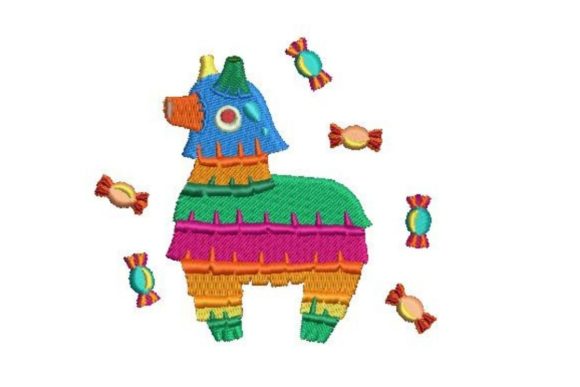
Pinata: A Cheerful Llama Embroidery Design
First Impressions: Playful, Vibrant, and Boutique-Ready
As an embroidery designer who’s developed collections for boutique apparel brands and Etsy sellers for over a decade, I opened Pinata expecting whimsy—and got something more: a confident, well-balanced machine embroidery design with real commercial potential. The llama-shaped pinata is instantly recognizable, full of personality, and radiates joyful energy without veering into cluttered or juvenile territory. It reads as playful yet polished—ideal for birth celebrations, baby showers, or everyday lifestyle apparel that wants to stand out gently. The stitch work suggests thoughtful digitizing: clean outlines, intentional color blocking, and enough detail (like the striped tail and confetti bursts) to hold interest at 3–4 inches wide—but not so dense that it overwhelms lightweight fabrics.
Sweatshirt & Hoodie Performance: Where Pinata Truly Shines
Pinata lands beautifully on neutral sweatshirts and pastel hoodies—especially in chest placement. Its compact shape fits naturally above the left pocket or centered just below the collarbone, avoiding distortion on curved seams. On oversized garments, it maintains visual weight without looking lost; on ribbed fabric, the balanced stitch density helps prevent puckering when paired with a medium-weight cutaway stabilizer. I’d avoid placing it directly over thick fleece seams or deep hoods unless you’ve tested thread tension and backing first. For sleeve accents? Yes—but keep it small (under 2.5") and orient the llama upright to follow natural arm movement. As a back design? Consider scaling up slightly and adding subtle confetti scatter around the perimeter for impact—just be mindful of hoop size limits.
T-Shirts, Denim, and Totes: Versatility With Intention
On cotton tees, Pinata reads crisp and friendly—especially with high-contrast thread colors against heather gray or navy. For denim jackets, it adds charm without competing with hardware or distressing; try matte cotton threads for texture harmony. Tote bags are a natural fit: the design’s cheerful mood aligns perfectly with handmade product branding, and its shape scales well across canvas or canvas-blend fabrics. In lifestyle product photos, Pinata delivers strong visual consistency—it’s distinct enough to become a signature motif for a boutique brand’s seasonal collection, yet flexible enough to pair with minimalist typography or coordinating floral motifs.
Commercial Use & Brand Identity Considerations
For Etsy sellers and small shop owners, Pinata offers more than decoration—it supports brand storytelling. A consistent use of this design across sweatshirts, totes, and onesies builds recognition fast. Buyers notice cohesion, and that subconsciously builds trust in your handmade product line. Because it’s rooted in celebration (Birthdays, baby showers), it also invites emotional connection—making it easier to craft compelling listings and social media graphics. When used thoughtfully, Pinata elevates perceived value: it signals attention to detail, intentionality in design selection, and understanding of audience sentiment. That matters—especially when customers compare your custom apparel to mass-produced alternatives.
Practical Designer Notes Before You Stitch
Before embroidering Pinata on your next batch of finished product, take these steps:
- Test on scrap fabric—especially if using stretchy knits, fleece, or textured weaves. Observe how the confetti elements and striped tail behave under tension.
- Confirm stabilizer choice: medium cutaway works best for sweatshirts and hoodies; tear-away suffices for stable cotton tees.
- Review thread color contrast. This design relies on vibrancy—avoid low-contrast combos on dark garments unless you want a subtle, tone-on-tone effect.
- Check hoop size requirements before production. If your machine has limited hoop capacity, verify Pinata fits comfortably within your largest standard hoop.
- Inspect stitch density visually in your embroidery software—if areas look overly saturated, consider lightening fill density by 5–10% for softer drape on lightweight fabrics.
- Test on similar garment fabric, not just muslin. Ribbed cuffs and hood bindings behave differently than flat panels.
- Compare placement options using printable mockups—small chest, sleeve, or back—to see what best suits your target silhouette and audience.
- Review Creative Fabrica product details and licensing carefully. Confirm permitted uses for commercial embroidery products before selling finished apparel.
Where to Use Pinata Carefully
Avoid placing Pinata on highly curved surfaces like elbow seams or deep neckline curves unless you’ve confirmed minimal distortion in testing. Tiny lettering isn’t part of this design, so no concerns there—but don’t add custom text inside the pinata body unless you’ve verified spacing and legibility at scale. On dark garments, double-check that satin-stitched areas won’t shadow or lose definition—sometimes a slight increase in top thread tension helps. And while Pinata works on cozy seasonal outfits (think sherpa-lined hoodies or flannel-lined vests), always test stabilizer adhesion on napped or fuzzy surfaces to prevent shifting.
Final Thought: A Design That Sells Itself
Pinata isn’t just another embroidery file—it’s a mood, a moment, and a smart addition to any Creative Fabrica embroidery library focused on boutique apparel. It bridges celebration and everyday wear, balancing trend-aware charm with timeless appeal. Whether you’re launching a small hoodie collection, refreshing your Etsy shop’s spring lineup, or building a cohesive brand identity around joyful minimalism, this llama-shaped pinata delivers expressive power without sacrificing professionalism. Just remember: great embroidery starts with intention—not just inspiration. Test, refine, and let Pinata do what it does best: bring cheer, clarity, and quiet confidence to every stitch.