Luggage Tag: A Travel-Ready Embroidery Design That Actually Works
First Impressions: Clean, Confident, and Instantly Recognizable
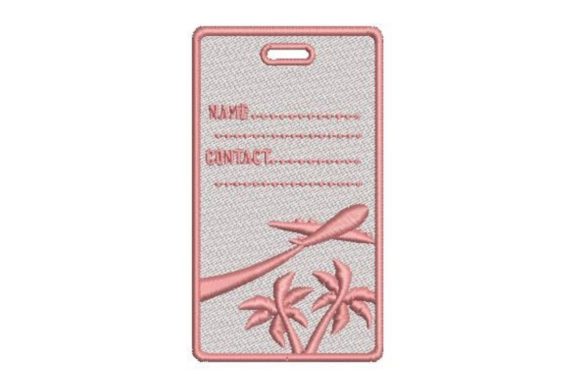
When I opened the Luggage Tag embroidery file, what struck me first wasn’t flashy detail—it was clarity. The shape is unmistakably a vintage-inspired tag: rounded corners, a subtle loop at the top, and clean negative space that lets the stitching breathe. It’s not overly ornate, but it’s not generic either. There’s a quiet confidence in its proportions—wide enough to hold readable text, narrow enough to fit comfortably on a tote strap or backpack zipper pull. As a designer who regularly sources embroidery files for client projects and small-batch handmade goods, I appreciate how this design signals “thoughtful travel” without leaning into cliché palm trees or suitcases.
A Real Project Test: Custom Tote Bags for a Local Boutique
Last month, I used Luggage Tag on a set of heavyweight canvas totes for a boutique launching a summer travel collection. We stitched it onto the front flap—not centered, but slightly off-axis, just above the seam line. Paired with simple monogram initials in a matching satin stitch, it gave each bag a personalized, boutique-level polish. Customers responded immediately: “I’d buy that just for the tag,” one said. That’s the power of a well-placed, purpose-built design like Luggage Tag. It doesn’t shout—but it anchors the whole piece. It transforms a plain tote into something that feels intentional, curated, and ready for adventure.
Where It Shines (and Where It Needs Care)
Luggage Tag performs exceptionally well on stable, medium-weight fabrics—think canvas totes, twill aprons, linen pillow covers, and structured cotton sweatshirts. Its balanced stitch density avoids puffiness on thicker materials, while the open layout prevents muddying on textured surfaces like terry cloth tea towels or woven blankets.
- Great for: embroidered patches (stabilize and trim cleanly), baby onesies (use soft cutaway stabilizer and low-density fill), holiday gift bags (stitch in metallic thread for subtle shine), and nursery decor (pair with neutral thread on oatmeal linen).
- Use carefully on: stretchy knits (pre-stabilize aggressively), dark fabric with light thread (check satin stitch coverage in your test run), curved surfaces like cap fronts (hoop with adhesive + tear-away), and tiny hoop sizes under 4x4 inches (verify the smallest version fits your intended placement).
What It Adds Beyond Stitching
This isn’t just a decorative element—it’s a trust signal. When customers see a crisp, well-executed Luggage Tag on a handmade product, they subconsciously register care, consistency, and attention to detail. That matters whether you’re selling on Etsy, stocking a local craft fair booth, or fulfilling a custom order for a wedding favor. It elevates the perceived value of your finished product without requiring extra labor—just smart design selection.
For small shop owners and digital product sellers, Luggage Tag also works beautifully as a design asset in printable mockups. Its strong silhouette reads clearly in black-and-white previews, and it scales cleanly across product variations—making it easy to show clients or shoppers exactly how their custom apparel or embroidered patch will look before stitching begins.
Designer Notes You’ll Actually Use
Before committing to production, here’s what I do—and recommend you do—with Luggage Tag:
- Test it on scrap fabric that matches your final project’s weight and texture—especially if using it on baby items or frequently washed kitchen towels.
- Check thread color contrast early. A pale mint satin stitch might vanish on light canvas; try navy or charcoal instead for definition.
- Review stitch density in your embroidery software. If layers feel heavy near the loop or corners, consider reducing density by 5–8% for softer drape on apparel.
- Confirm hoop size compatibility—some versions may include multiple sizes; choose the one that best suits your product’s scale and placement.
- Inspect small details at 200% zoom: Are letterforms legible? Does the loop stitch cleanly without skipped stitches or thread nesting?
- Test it in both light and dark fabric mockups—not just visually, but physically. Dark backgrounds often need denser satin stitch coverage.
- Always pair with appropriate stabilizer: cutaway for knits, tear-away for stable wovens, and fusible + tear-away for lightweight linens.
- If selling finished products commercially—or listing the embroidery file itself—verify licensing terms. The description mentions “multiple embroidery file formats,” but confirm whether personal and commercial use are both covered.
Fitting Into Your Creative Workflow
As an embroidery product reviewer who’s tested hundreds of designs, I can say Luggage Tag stands out because it’s versatile without being vague. It’s not a placeholder—it has personality, but it doesn’t overwhelm. That makes it ideal for craft businesses building cohesive collections: imagine it stitched on a travel-themed apron, then echoed on matching oven mitts and a linen luggage sleeve. Or use it across holiday embroidery projects—mini versions on gift tags, full-size on personalized travel journals.
It also bridges personal and commercial use seamlessly. Whether you’re embroidering a baby’s first passport holder or producing 50 branded tote bags for a travel agency, Luggage Tag adapts without losing its identity. And for Etsy sellers and digital designers, it’s a reliable anchor piece—something buyers recognize as quality, and something you can confidently feature in listings, social posts, and email campaigns.
Final Thought: A Small Design With Big Utility
Not every embroidery file earns repeat use. Luggage Tag does—because it solves real problems: How do you add travel charm without looking touristy? How do you personalize a product without cluttering it? How do you maintain brand consistency across diverse items? This design answers all three, quietly and effectively. It’s become one of my go-to assets for Vacation-themed embroidery projects—not because it’s flashy, but because it’s trustworthy, adaptable, and genuinely useful. In the world of machine embroidery design, that’s rare. And worth holding onto.