How Mandala Leaves Feels on the Hoop and in Your Shop
Some designs promise a lot on screen and deliver something entirely different once the needle hits the fabric. Mandala Leaves does not fall into that trap, but it does demand that you think a little before you stitch. I tested this one with a specific project in mind: a set of linen pillow covers for a client who sells boutique home decor at weekend markets. She wanted something botanical without being fussy, detailed without looking busy, and calm enough to complement a neutral living room. Mandala Leaves checked all of those boxes before I even opened the file.
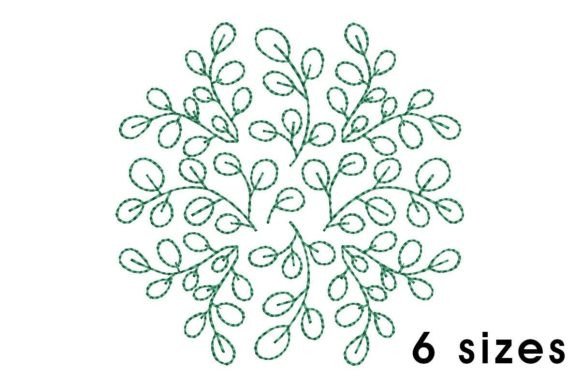
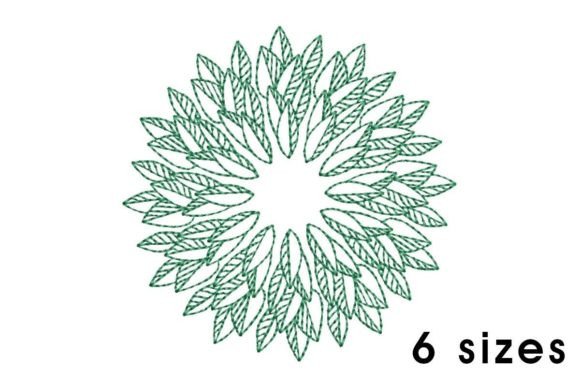
The first thing you notice is how the leaf shapes spiral outward from a quiet center point. It is not a traditional floral mandala, and that is exactly why I reached for it. The leaves feel more grounded, more organic, and less like a medallion you would expect on a bohemian tapestry. The mood skews modern botanical, almost like a pressed leaf sketch rendered in thread, and that gives it versatility that a purely decorative mandala sometimes lacks.
When I pulled it up in my software, the pathing looked clean. No unnecessary trims, no confusing jump stitches, and the density appeared balanced between the outlined leaf veins and the filled petal shapes. You can see where the digitizer made choices to keep the satin stitch borders crisp without making the interior fill so heavy that it would pucker lightweight cotton. I appreciated that restraint immediately.
First Stitch Test on Linen and What It Taught Me
I hooped a medium-weight linen with a cutaway stabilizer, loaded a soft sage green for the leaves and a muted gold for the center accents, and let it run. The design stitched out cleanly in just under eighteen minutes on my single-needle machine. The fill stitch had just enough coverage without becoming bulletproof, and the satin borders around each leaf held their shape without pulling inward.
One detail worth noting: the smallest leaf tips taper to a fine point, and on linen, those points came through sharp and precise. If you are stitching Mandala Leaves on anything with a looser weave, like osnaburg or a coarse homespun, you might see a little blurring at those tips. A water-soluble topper will fix that in seconds, but you need to know it before you ruin a good piece of fabric.
I also tested it on a cotton canvas tote bag, and that is where the design really sang. The texture of the canvas gave the leaves a slightly dimensional look, almost like embroidery on handmade paper. If you sell embroidered tote bags, market totes, or beach bags, this design will make your product look elevated without feeling overworked. The leaf motif reads as intentional and serene, which appeals to buyers who want something pretty but not precious.
Where Mandala Leaves Belongs in Your Product Line
After running it on three different substrates, I have a clear picture of where this design adds the most value. Linen pillow covers are an obvious win, especially in soft greens, dusty blues, or warm neutrals. The design is large enough to serve as a focal point on an eighteen-inch cover without crowding the edges, and the open center keeps it from feeling too dense.
For apparel, I would place Mandala Leaves on the back of a relaxed-fit sweatshirt, centered just below the neckline, or on the chest of a simple t-shirt in a tonal thread color. It does not scream for attention, and that quiet confidence is exactly what certain customers want. Think of someone buying a handmade gift for a sister who loves nature but dislikes loud graphics. This design fits that person perfectly.
Kitchen towels and tea towels are another strong match. Stitch it in a single earthy color on a flour sack towel, and you have a product that looks like it belongs in a high-end farmhouse catalog. Pair it with a simple wooden ring for hanging, and you can sell these as sets at craft fairs or in your Etsy shop with minimal additional effort.
Nursery decor also came to mind during testing. The leaf shapes feel gentle and growth-oriented, perfect for a baby blanket corner or a framed hoop art piece above a crib. I stitched a smaller version on a soft bamboo blend baby blanket, and the result was delicate enough to suit a newborn while still feeling substantial and well-made.
For those of you making embroidered patches, Mandala Leaves can work, but you need to be intentional about scaling. Reduce it too much, and those fine leaf veins will start to close up. I tested it at sixty-five percent of the original size, and it held together, but anything smaller would make me nervous. If your patch business relies on intricate miniature work, test thoroughly before committing to a production run.
Thread Color Choices That Change the Entire Mood
One of the most underrated skills in embroidery product development is knowing how much thread color affects a design's personality. Mandala Leaves transforms completely depending on your palette. In monochromatic sage or eucalyptus tones, it feels calm, organic, and spa-like. In deep burgundy and dusty rose, it shifts toward romantic and autumn-inspired. Stitch it in metallic gold on a dark navy background, and suddenly it becomes elegant enough for evening wear or holiday decor.
I strongly recommend testing this design in at least three different colorways before you list it in your shop. The structure of the leaves supports everything from subtle tonal work to bold contrast stitching, and your customers will appreciate seeing those options in your listing photos. If you offer custom thread color choices, Mandala Leaves gives you an easy upsell because it is simple enough that different palettes do not clash with the linework.
Fabric Types That Play Well and Those That Do Not
Let me be specific about what worked and what gave me pause. Medium-weight woven fabrics performed beautifully: linen, cotton canvas, quilting cotton, and cotton-linen blends all produced clean, professional results. The design's density did not cause tunneling or puckering on any of these when paired with an appropriate cutaway stabilizer.
Stretchy fabrics require more care. I tested Mandala Leaves on a cotton-spandex jersey for a lightweight sweatshirt application, and while the design stitched out fine with a fusible mesh stabilizer, I noticed slight distortion around the outer leaf edges after washing. It was not enough to reject the project, but it did remind me that knit fabrics and dense satin borders are not always best friends. If you plan to use this on t-shirts or onesies, consider using a softer fill stitch setting or adding a lightweight topping to keep everything stable during stitching and laundering.
Thin fabrics like voile or single-layer rayon are risky for any design with this much surface coverage. The stitch density that gives Mandala Leaves its crisp definition will overwhelm delicate sheers. Stick to fabrics with some body, and you will avoid the heartbreak of seeing your work pucker or warp after the first wash.
Cap and Hat Applications Demand Patience
Curved surfaces like baseball caps and dad hats present a specific challenge. The circular nature of Mandala Leaves means you need to be precise about placement and hooping. The design is not overly tall, so it fits within most cap embroidery fields, but the leaf tips on the outer edges can catch on the curved surface if your hooping technique is even slightly off.
On a structured cap with firm buckram, the result was sharp and impressive. On an unstructured dad hat with a softer crown, I saw minor registration shifts in the outer ring of leaves. If caps are a significant part of your business, test one thoroughly and consider slightly increasing your pull compensation before running a batch. The design is worth the extra setup because a botanical cap with subtle leaf details stands out in a market flooded with bold logos and sporty graphics.
What Small Business Owners Need to Know Before Selling
If you sell finished embroidered products, Mandala Leaves gives you a design that photographs beautifully. The open center and defined leaf shapes create clear, recognizable silhouettes in product photos, even at thumbnail size. That matters on Etsy, where a buyer scrolling through dozens of listings needs to understand your product in under a second.
I would position items made with this design in the giftable home decor and wearable art categories. Wedding shower gifts, housewarming presents, Mother's Day items, and self-care themed bundles all suit the gentle botanical mood. The design does not lean too feminine, which broadens your customer base. A dad buying an embroidered throw pillow for his reading nook is just as likely to choose Mandala Leaves as a mom decorating a nursery, provided your product photography speaks to both audiences.
For digital embroidery file sellers, the commercial appeal here is strong. The design is versatile enough that your customers can use it across multiple product categories without it feeling repetitive. Just make sure you clearly communicate any license restrictions and stitch specifications in your listing. If the original file comes with tested quality assurance, mention that upfront. Buyers who have been burned by poorly digitized designs will appreciate knowing these files were checked before release.
One caution: the product description notes that altering the file may affect the output, and I would echo that warning emphatically. Resize with care, avoid converting formats unnecessarily, and always run a stitch-out after any software edit. I watched a fellow maker try to enlarge Mandala Leaves by thirty percent without adjusting stitch density, and the result was a gappy mess that wasted thread and stabilizer. Respect the digitizer's work, and the design will reward you.
Practical Notes for a Smooth Production Run
Before you stitch Mandala Leaves for a client project or shop inventory, get comfortable with it on scrap fabric that matches your final material. Check your thread tension, especially where the satin stitch borders meet the fill areas. Those transition points are where inconsistencies show up first.
I also recommend viewing the design in grayscale before you lock in your thread choices. A black and white mockup reveals whether your color contrast is strong enough to define the leaf layers or whether the design will read as a shapeless blob. Mandala Leaves has enough internal structure to hold up well in low contrast, but your customers need to see the leaf pattern clearly to feel confident clicking buy.
Stabilizer choice is not the place to cut costs here. A quality cutaway for woven fabrics and a fusible mesh for knits will give you consistent, professional output. The design is not complicated in a way that demands exotic supplies, but it does rely on clean edges and smooth fills that only proper stabilization can guarantee.
Who Will Love This Design Most
After working with Mandala Leaves across several projects, I have a clear sense of the maker who will get the most mileage from it. If you build your product line around natural themes, modern minimalism, botanical art, or sophisticated gift items, this design belongs in your library. It plays well with other leaf and floral motifs, so you can easily pair it with a smaller accent design on coordinating products.
Etsy sellers focused on bridesmaid gifts, personalized home decor, or eco-conscious lifestyle products will find Mandala Leaves aligns with their brand language. Craft fair vendors can offer it in multiple thread palettes to match different kitchen and living room aesthetics. Apparel decorators targeting the slow fashion and handmade wardrobe crowd have a chance to create something that feels current without chasing trends.
The design is not loud, not trendy, and not trying too hard. That restraint is precisely what makes it usable across dozens of real-world projects. I have already added it to my personal favorites folder, and I suspect you will too after your first clean stitch-out.
Take the time to test your thread colors, confirm your hoop size, and choose fabrics with enough structure to support the coverage. If you do that, Mandala Leaves will deliver consistent, giftable, saleable results that make your embroidery work look thoughtful and polished. And in this business, that is exactly the kind of quality that keeps customers coming back.